
2026-07-28 America At War 2024-2026 by Mark Blitz
ISBN 13: 9781737650782
July 28, 2026
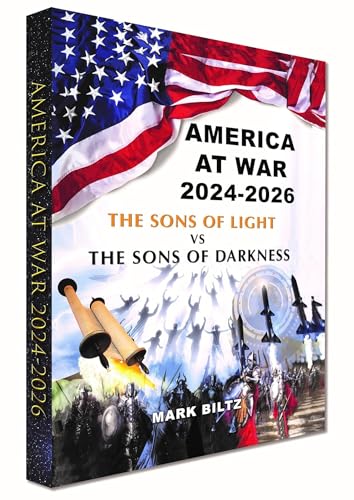
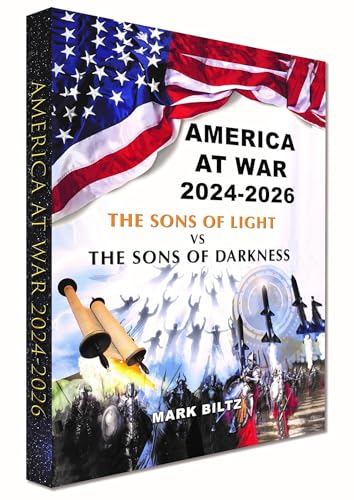
Mark Blitz asserts that he was one of the first people to observe the pattern of lunar and solar eclipses back in 2008 that other authors—like Jonathan Cahn—who has several pieces of work reviewed here, have made popular in books detailing the pattern that occurs in Biblical literature called the Shemitah. Blitz's claim is that he noticed it on a NASA chart back then, but that he did not know what it meant. He knows now, he says, that it means war—multiple kinds of war—war leading right on in to Armageddon.
He observes that the eclipses that matter happen on Biblical feast days or big Hebrew holidays, and believers should pay careful attention when a day does this. The pattern Mr. Blitz saw way back in 2008 falls on a series of Hebrew dates of significance in thatthey are all feast days or High Holy Days. Others had urged him to write this book so as not to be left out of the discussion around his early notice of these days. The outcome, then, is America At War 2024-2026. The subtitle of The Sons of Light Vs The Sons of Darkness is a direct quote from the Dead Sea Scrolls. Mr. Blitz is aware of this, and so invites the comparison.
There is a lot to like about Mr. Blitz's work in that he carefully backs up his assertions and "shows his work." The force of his arguments for his perspective depends solely on the axioms upon which they rest. There are several weak pillars that can lead to a shaky roof. The first big assumption that Mr. Blitz makes is that the creation calendar is a good calendar to use for calculating longer patterns of time. If this assumption proves incorrect, and there is reason to suppose the Dead Sea Calendar is markedly different than the Creation Calendar, then the correlation of the dates proffered while interesting ultimately becomes a kind of exercise in noticing patterns in calendars that have been defined by other sects for their own purposes.
Another shaky spot that Mr. Blitz often alludes to concerns Solomon being a kind of Anti-Christ. He leans on this understanding to try to interpret the Song of Solomon in a certain light. What he overlooks is that Solomon himself can be disobedient and also NOT be the Anti-Christ. However, such disobedience as Solomon performs is how the Anti-Christ comes to be. There is a key difference here between IS a type of Anti-Christ and BEHAVES in a way such that the Anti-Christ comes into being. Lots of people enabled Hitler to come into power, but there was only one Hitler. Solomon is not Hitler.
When interpreting the Song of Solomon, instead of seeing the Shepherd that the woman in the work is attracted to as being some competition for Solomon or an extension of her own narcissism, it is instead the bride hearing the call of the future Messiah to which she naturally is inclined. The best she has, in her present scenario though, is her husband who, we suppose through the analysis Mr. Blitz uses, is Solomon.
While Mr. Blitz swings and misses at some pitches, though, he wins the ball game by focusing on the greater meaning of the eclipses themselves and even if he is using a slide rule based on an incorrect calendar, he is still able to put the shuttle in orbit around the moon in that he notices that all the patterns that look like the ones he notices in 2008 tend to happen around Israel experiencing some major shifts such as the pattern that occurred in 1967 and 1968. He therefore supposes that war is imminent, and it is probably going to be with Israel's perennial enemies, the Edomites/Amorites. He traces a lot of interesting origins when it comes to the names of people living in Israel, such as Palestinians, which he interprets to mean as "invader." He does the same with certain Hebrew words, and notes, as many others have, that the Hebrew word for violence is Hamas.
He does offer a defense on Biblical terms of no one knowing the day or the hour of the end by pointing that his calculations are not meant to be ironclad but that believers are supposed to be aware of the signs of the end approaching. This, he stipulates, is his main intent—to let believers know that these heavenly signs are not random and have severe, earth-shaking consequences.
Sometimes his writing is a little bit disconnected and could have used the help of a good editor to make sure his ideas connect strongly, but there is an endearing quality to the vernacular he uses when he is telling his view as often times one might see a "duh" or "wowsers" tossed into the mix. One feels more like they are in on a conversation than a polished work, but this actually works for the material he is promoting.
Where things go off track is that Mr. Blitz does suggest that he thinks a lot of stuff is going to hit the fan in 2024-2026. Much of what he thinks might happen has not happened in the time that has passed, and 2026 has more days behind it than ahead of it. Again, nothing he predicts is a guarantee, but it might have been better to title the book America at War and leave the dates off since that gives the title a definite shelf appeal for a designated time. After that, readership will tend to throw the baby out with the bathwater and see the book as being false when the majority of the content is true. It just happens to be very difficult to calculate the timing of Biblical events because so many calendars have come and gone.
The final part that Mr. Blitz emphasizes which is, perhaps, somewhat detrimental to the work is that he thinks there will be a "boots on the ground" war in America. He sees the eclipse as a sign for America in specific, and interprets that it means America itself will be judged. On the other hand, an eclipse is also a sign for penitence, but he does not mention this possibility as much as the "catastrophe" aspect of America going into some kind of Biblical upheaval. While the 2017 eclipse happened only over America, and such eclipses can mean the judgment of a nation, they can also signal a type of awakening and penitence that a nation performs. One must always be a little suspicious of dire calamity being forecast for one's own home continent. One may be right, or, like Nineveh, one may be wrong. What one wishes to avoid is being compared to Jonah and being asked "Was your anger rightly kindled?"
If you have never had an introduction to Biblical prophecy and the timing of events like eclipses, you could do far worse than Mark Blitz's book. Pick it up, add it to your shelf, and ponder what he has to say carefully.
You should also read:

2025-08-06-How the Post Office Created America by Winifred Gallagher
ISBN: 978-0143130062 August 6, 2025 Here is how a conversation might have happened with the publisher and the author of this book, Winifred Gallagher: >Publisher: So we are looking for a top-notch academically researched piece on the United States Post Office and what you have…
Continue reading...
2025-02-05-A Very Princpled Boy by Mark A. Bradley
978-0465030095 February 5, 2025 Mark Bradley decided to take on a difficult task. The story of Duncan Lee is not one that most authors would want to tackle, since the subject of the work could be easily characterized as an unrepentant traitor for communist Russia…
Continue reading...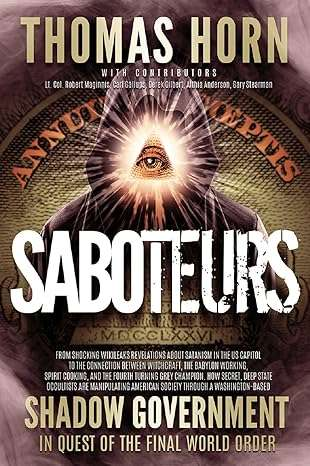
2024-09-06-Saboteurs How Secret, Deep State Occultists Are Manipulating American Society by Thomas Horn
ASIN: B078WF52H3 September 6, 2024 Thomas Horn, is sadly no longer alive. Fortunately, he has left some of his work behind as a kind of legacy. In The Saboteurs he outlines many pieces of what he believes are connected shadow government entities that are gradually…
Continue reading...